

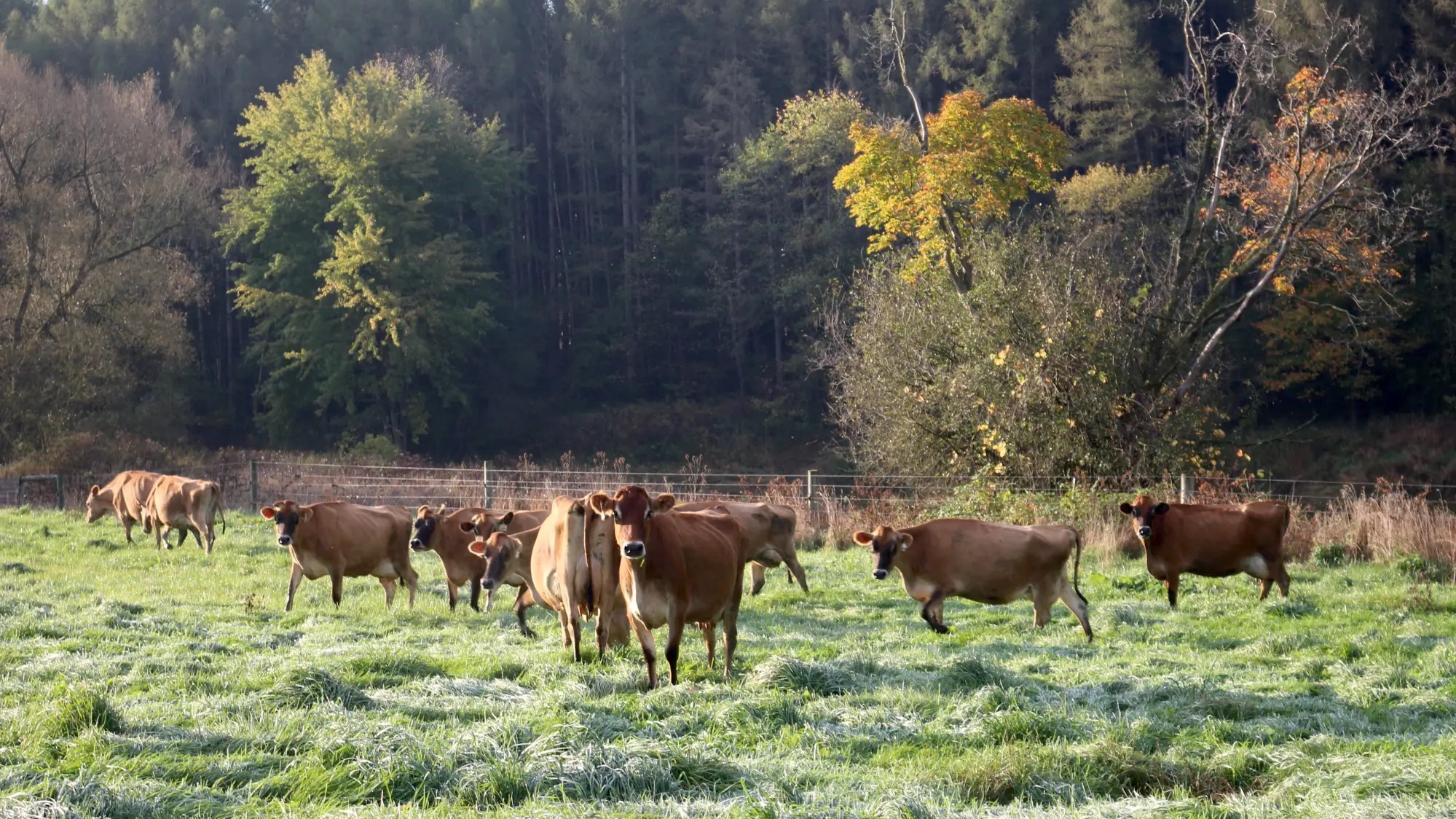
More than 40 of the United States have raw milk legal in some form—including 12 of the 13 which border Canada—yet the US has not had a death from raw milk in decades. Perhaps that is because humans have been consuming milk raw for at least 6,000 years.
However, in BC, the sale of raw milk remains illegal since 1991.
“Unfortunately, the current law forbids distribution of a product which is legal in 43 US states plus England, Ireland, New Zealand, and all European nations,” laments the British Columbia Herdshare Association, a legally-incorporated non-profit society serving the herdshare community of British Columbia through providing support, education, and advocacy.
The BCHA is among organizations across Canada pushing to change federal and provincial laws prohibiting raw milk “because the law is unsupported, obsolete, and ineffective.”
B.C. Dairy says that “raw milk creates a high risk for developing or spreading illness,” which we now know to be an extremely misleading statement. Outbreaks are exceedingly rare and typically minor besides— in a study of non-pasteruzied milk “outbreaks” cited by the organization itself, zero deaths were reported.
“Consumers in B.C. deserve to have legal access to farm-fresh unprocessed milk,” argues BCHA. 89% of Canadian dairy farmers drink their own farm-fresh milk, according to a 2010 study by Guelph University.
BCHA and similar organizations such as the Canadian Artisan Dairy Alliance are “working toward dialogue with government with the goal of trying to modernize B.C. law to legalize micro-dairy herdshares.” CADA provides ample information on up-to-date facts and data on the health and safety of raw milk production and consumption.
Ultimately, the raw milk situation does not boil down to genuine health concerns for Canadians, it is now clear, but rather profit over people—a classic agenda of politicians and the wealthy around the world.
“Not only does raw milk prohibition favour rent-seeking agendas and the regulatory state, but lobbying groups are also misleading the public,” pointed out Fergus Hogson as a research associate for the Frontier Centre for Public Policy last year. “To prop up the economic albatross against small, independent farms, Canadian law describes unpasteurized milk as a ‘health hazard.'”

Morally speaking, the obvious ethical choice is to allow Canadian farmers to sell the products they want to, and to allow Canadian consumers to buy the products they want to, all within a reasonable regulatory bandwidth. Instead, we have a strict and archaic prohibition.
BC’s nonsensical banning of raw milk “assumes Canadians are too dumb to assess the risks and make up their own minds,” Hogson writes, noting exceptional hypocrisy: “Meanwhile, all manner of sugar- and additive-laden junk food is available at one’s fingertips,” as well as alcohol and cannabis.
The province has legalized hard drugs, as addiction and mental health concerns skyrocket, in the name of “harm reduction.” The province tolerates mutilating young girls and boys as part of “gender-affirming care.”
But Lord help us should we allow milk choice.
Ontario-based agricultural newspaper Farmers Forum argues that Canadian support for the mandatory pasteurization of consumer milk is “a proxy for support of supply management,” as control over supply “becomes more difficult if all milk doesn’t have to leave the farm for processing.”
When stripped of red tape, it becomes distinctly evident that raw milk should be part of Canada’s “free” market.
“There is undoubtedly a market for raw milk,” stated the Honourable Justice John Clyne, Judge of the Supreme Court of B.C., Commissioner in the Report of the British Columbia Royal Commission on Milk in 1954.
“I do not suggest that a person who really wants to drink raw milk and is prepared to accept the risk of doing so should be deprived of that privilege,” he concluded.
Amen.
Discover more from THE MIDWAY ADVANCE
Subscribe to get the latest posts sent to your email.

