

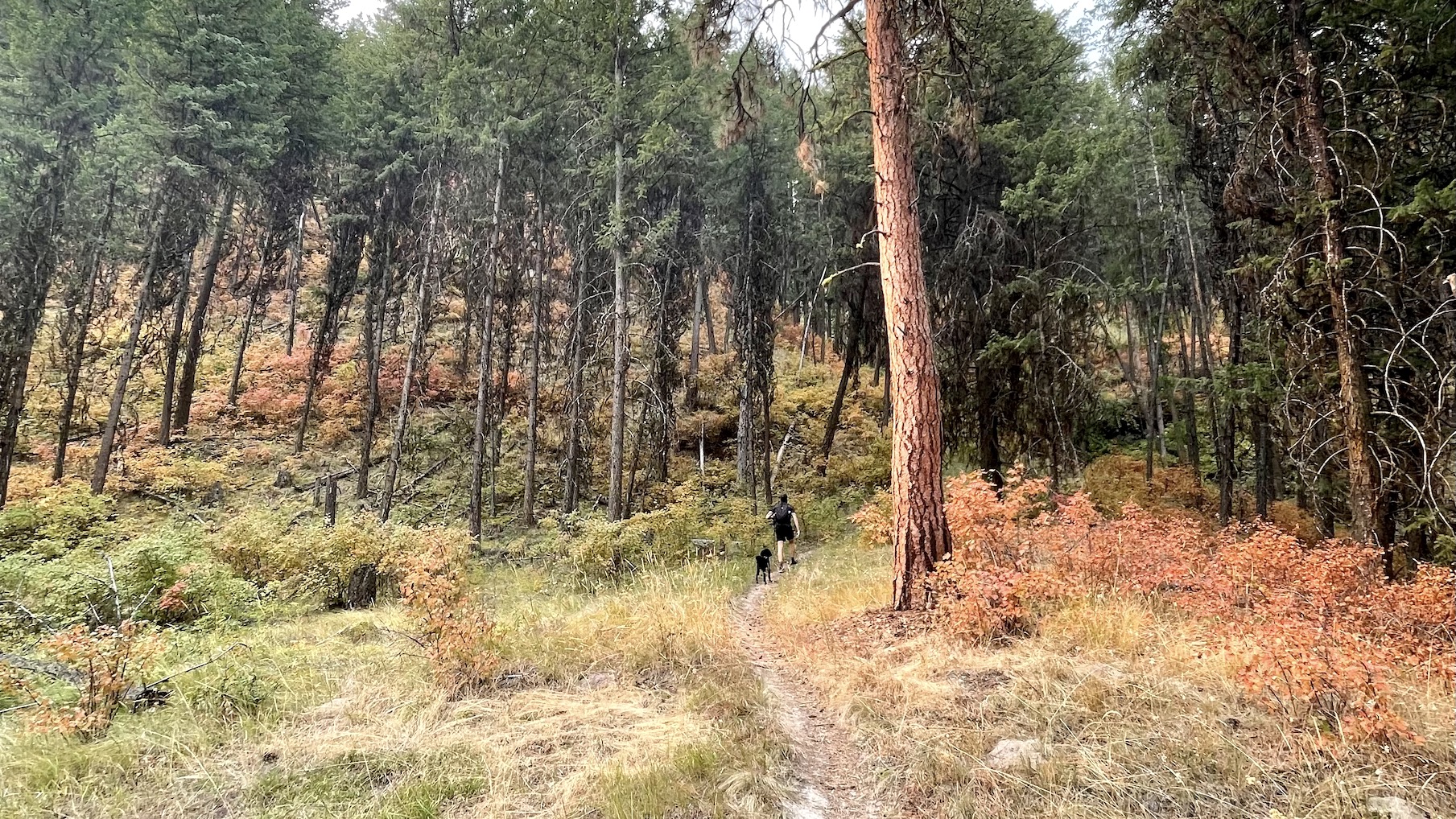
Have you ever wondered how British Columbia’s world-class biking and hiking trails are made?
Daniel Scott knows.
The seasoned Trails Specialist has been applying his “education in landscape architecture with a passionate focus for wilderness recreation” at Recreation Sites and Trails BC since 2016, bringing with him a personal trail-building legacy that now spans more than two decades. He is known for his work on the Trans Canada Trail in the West Boundary region.
Scott recently provided wisdom on the trail-building process.
How to Determine Where a Trail is Built
“There are many considerations when determining where a new trail can be built,” says Scott, including “avoiding environmentally sensitive areas, working within existing land-use plans, topography, and type of soil in the area, along with the type of user the trail is intended for.”
Trails are typically situated on mellower side slopes, avoiding steep terrain to reduce the likelihood of geotechnical instabilities, according to Scott.
The Process of Building a New Trail
A crew of three to five people work with a variety of hand tools to build a trail, Scott says, with some crews employing small machinery such as mini excavators.
Step one: Clean up the site.
“A standard approach to trail construction has a crew start with clearing the trail corridor of debris and vegetation,” Scott says.
Step two: Rough-in a path.
“This is followed by the trail being roughed in—often by machine—and then hand finished to specifications,” he says.
Step three: Add the details.
A crew may construct “additional trail infrastructure, such as boardwalks, bridges, or technical trail features,” according to Scott.
These features may be designed to add fun and challenges for the trail user or to protect sensitive ecosystems and add climate resilience.
Sign up to receive free local news at your digital doorstep.
How Long Does It Take?
“Much of the most complex work for a new trail is at the front end of the project,” explains Scott—the stuff before the trail-building itself, such as finding a good location and navigating government processes.
Construction time varies depending on several factors: type of trail, distance, terrain, amount of infrastructure, and length of season.
In general, however, “all but the most ambitious of trails are usually built within one season,” according to Scott.
And this specialist knows ambitious trails.
“The longest trail project I have worked on has to be the rail trail portfolio, which totals more than 450km,” he says.
The rail trail portfolio consists of the old Kettle Valley, Columbia, Western, and Slocan Valley rail line beds running from Brodie Station near Coquihalla Highway through Cascade Mountains, the Okanagan, the Kootenay-Boundary, and finally through Slocan Valley.
“It is a relic of another time with rock cut tunnels, massive wooden trestle bridges, and castle-like retaining walls that weave through some spectacular landscapes,” Scott says.
Explore the best trails in Boundary Country through the Explorer’s Guide.
Photo by Woodfin & Co.
Discover more from THE MIDWAY ADVANCE
Subscribe to get the latest posts sent to your email.

